Ireland has an incredibly long migrational history, beginning with those who travelled to England and Scotland during the early medieval period, and continuing in the present day where Irish emigrants can be found in even the most far-flung corners of the world. There are an estimated 35 million members of the Irish diaspora currently living in the USA, 600,000 in England, and 7000 ‘first generation’ Irish in the UAE; to give just a small snapshot of the global reach of this specific migrational group. The Department of Foreign Affairs and Trade in Ireland (DFA) define the global Irish diaspora as follows;
Based on the definition given by the DFA, and how Ireland itself views its own global citizens, it is quite difficult to provide absolute statistics on how many Irish people are living in a certain place at any given time. It is no longer possible to denote ‘Irishness‘ that is hinged solely on being born in Ireland, having Irish citizenship, or by being in possession of other legal documentation; anyone with Irish ancestry can claim to fully encompass Irishness, and are very much encouraged to do so by the Irish government.
What is Irishness?
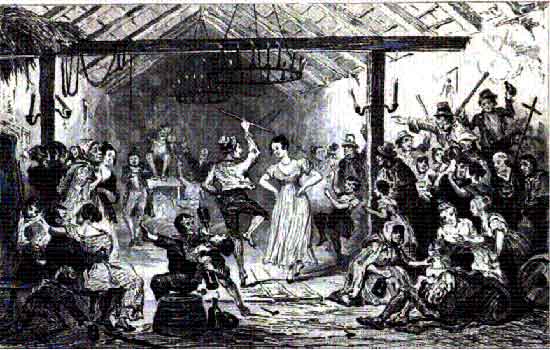
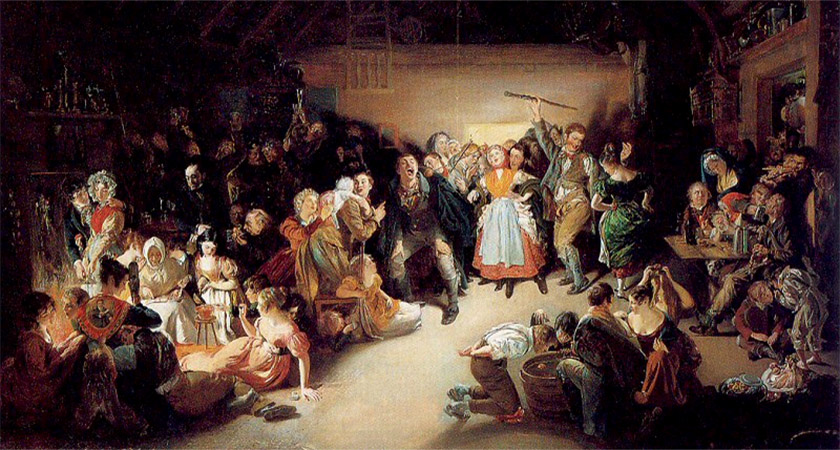
Since Irishness has entered into abstract meaning, it can become a challenge when wanting to explain exactly what it means to feel or be Irish. However, this is where folklore comes in to lend a guiding hand. With its defining features of customs, stories, traditions, and beliefs that belong to a community passed down through generations by word of mouth, folklore provides an insight into Irishness around the world by enabling us to look at the ways that Irish heritage is celebrated and recognised within the global diaspora. In any mass-migration, it is not just the people that travel. They take their traditions and beliefs with them. Sometimes they go to great effort to conserve traditions and beliefs in actuality, other times traditions and beliefs are allowed to evolve to fit in with new lands and communities. In all cases, folklore moves with the people it belongs to. This can come in the form of food, music, religion, and even dress; anything that can be transmitted along the migrational journey in either a physical or more intangible form. As such, this blog will examine the ways in which Irish traditions and beliefs migrated with those who left Ireland to seek new pastures, by examining Irish celebratory culture, in both its joyous and – sometimes – more sorrowful forms.

 Folklore Celebrations and the Irish Diaspora