The above line, taken from John Dryden and Nathaniel Lee’s poem ‘From Oedipus’, perfectly encapsulates the eerie spookiness that surrounds Halloween, celebrated throughout the world on October 31st. A holiday that some refer to as a modern American invention, Halloween is actually a lot older than most realise, with it’s origins stemming from Ireland and ancient Celtic culture. In it’s original incarnation as the Gaelic holiday of Samhain, the celebration acted as a festival to mark the end of the harvest and transformation of the seasons in to the darker half of the year. The festival was observed from October 31st to November 1st and included a feast. In a much similar fashion to the Mexican Dia de Muertos, which falls at a similar time of year, it was believed that the souls of the dead were able to walk among the living during the festivities. So much so, that places would be set at the feast table so that the dead could dine with their living relatives. With the Christianisation of Ireland, Samhain was replaced by All Saints and All Souls Day, with the religious festival evolving into Halloween through commercialisation of the holiday.
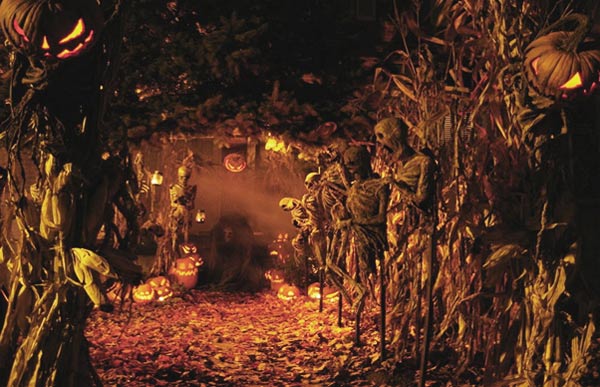
Though a globally observed holiday, it is America where Halloween is celebrated in the grandest fashion, aided by the folklore transported by the Irish who migrated to the States during the 18th and 19th centuries. It is thanks to Irish folklore that some of the most recognisable aspects of Halloween exist.
Halloween Traditions based on Irish Folklore
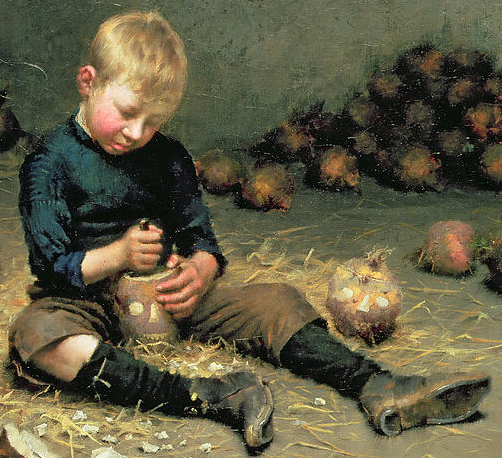
The classic pumpkin, or Jack O Lanthern, carved with a scary face and lit from the inside with a candle, is a mainstay of modern Halloween tradition. The original Jack O Lantern was made by carving a turnip and placing a candle inside, inspired by the Irish folktale of Stingy Jack. Stingy Jack is known for tricking the devil by having him turn into a silver coin when Satan came to collect his soul. Jack struck a deal with the devil that saw him receive 10 more years before he had to depart to hell. After the 10 years passed and Satan returned once more to collect him, Jack tricked him again and the devil eventually agreed that he would never take him into hell. Upon Jack’s death, he tried to make his way to heaven and was refused due to the sinful life he led. He begged Satan to let him into hell but the devil refused to take his soul. Instead, he gave Jack an ember to carry with him as a warning to others not to play games with the devil. According to Irish folklore, Stingy Jack has since walked the plane between heaven and hell, doomed to an eternity without peace, carrying his ember inside a hollowed turnip. The pumpkin, being more readily available in America than the turnip, was adopted by Irish migrants within the States. The candle inside the pumpkin is thought to ward off evil spirits, and usually acts as an invitation for trick’or’treaters.
Dressing up, or guising, is also practised at Halloween. Those observing the holiday tend to dress themselves in elaborate and supernaturally themed costumes, the most common in the contemporary period being witches, werewolves and vampires. Contemporary Halloween tradition has seen an increase in costumes related to popular culture, with the characters from recent blockbusters featuring during the festivities in the year of their release. The custom of dressing up is based on the Celtic belief that the dead can cross-over during the Halloween season, as well as the belief that the Aos Sí, Irelands fairy race, are up to their old tricks during this time. Disguising oneself in costume was thought to keep you safe from interference from both the dead and the Aos Sí for the duration of the festive period. Though great effort is put into modern costume during Halloween, especially in America, it is the older and more simple designs that inspire the most fear…
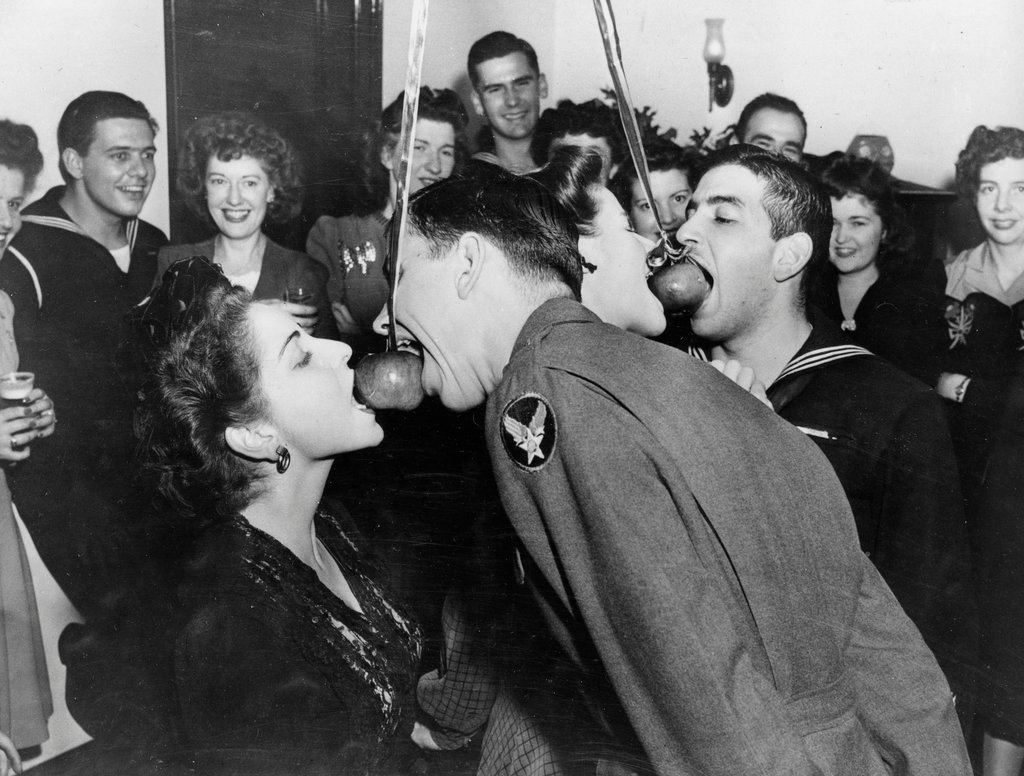
At any Halloween party you are likely to find people participating in apple bobbing. In the past, it was common for young people to participate in the game, and the first person able to grab the stalk between their teeth and retrieve an apple was said to be the next to marry. In Ireland, the game is referred to as Snap Apple, where it is also believed that placing a bobbed apple beneath your pillow will enable you to dream of a future sweetheart. Sometimes, instead of apples being placed in water, they would instead be tied on a string and hung from the ceiling, but the rules of the game remained the same. On the island of Newfoundland and Labrador, which saw up to 35,000 Irish migrants arrive between the late 17th and early 19th centuries, Halloween is referred to as Snap Apple Night. This is yet another clear example of how folklore travelled with Irish migrants and became embedded into the cultural celebrations of their newly settled land.
Conclusions
By studying the folklore of Irish migrants, it is possible to trace the ways that traditions and beliefs are carried with those who undertake the journey to a new land. Folklore allows for new insights on the aspects of social history that are too often overlooked when looking at the history of migration. Instead of just providing figures and statistics about who went where, we are able to paint a more cohesive picture of the cultural and social experience of migrants. This approach does not just apply to Ireland and it’s diaspora, but to all cultural and ethnic diasporas that exist around the world, whichever way they chose to identify. Folklore is the story of the people it belongs to and holds an unrivalled ability to integrate itself into new cultures, as well evolve in line with the lived experiences of those who carry it with them, wherever they may end up.

 Folklore Celebrations and the Irish Diaspora